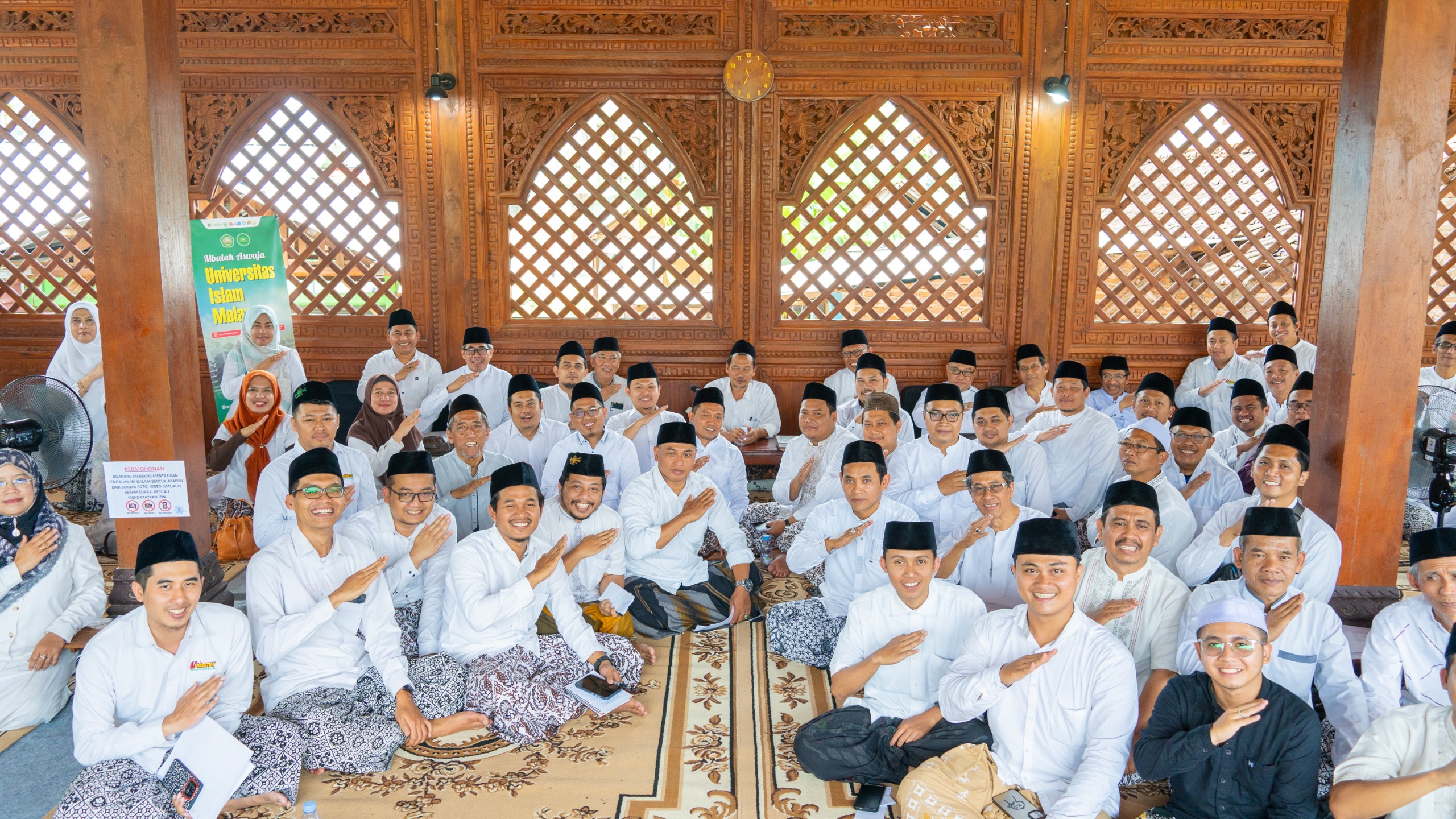

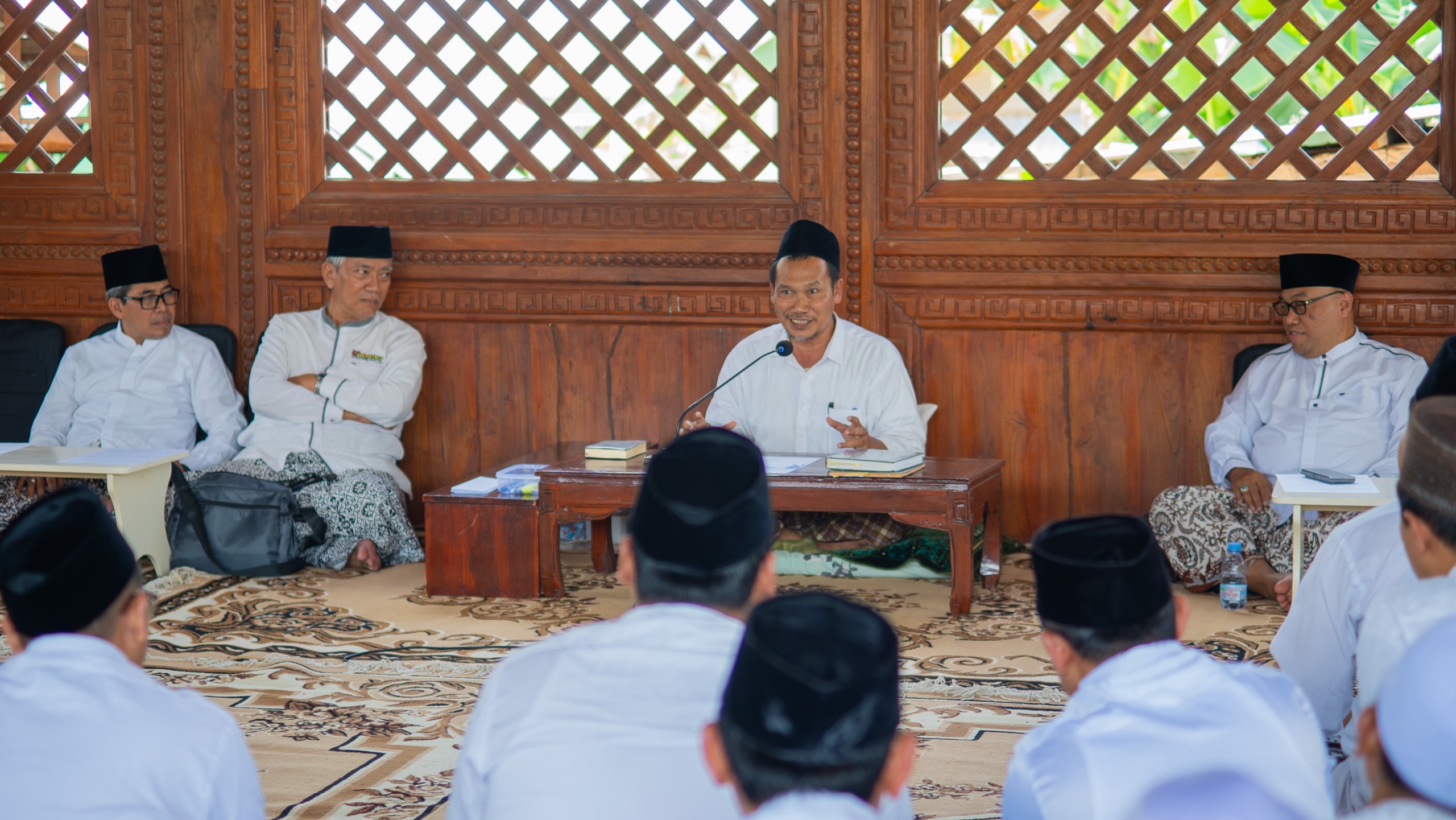
In a deeply reverent atmosphere, Universitas Islam Malang (UNISMA) held Mbalah Aswaja, a spiritual forum aimed at strengthening the values of Ahlussunnah wal Jamaah (Aswaja) through an in-depth engagement with the Qur’an and Hadith. The gathering took place at Pondok Pesantren Tahfidzul Qur’an, LP3IA in Narukan Village, Kragan District, Rembang Regency, Central Java, and was guided directly by Ahmad Bahauddin Nursalim, widely known as Gus Baha.
UNISMA Rector, Prof. Drs. Junaidi Mistar, Ph.D., explained that the presence of the university’s academic community at the pesantren reflected respect for the traditional chain of Islamic scholarship. “A santri is the one who visits the kiai. We came here to study and to uphold the principles of the santri tradition, learning to strengthen our Aswaja character through the Qur’an and Hadith. May this gathering be blessed by Allah SWT and bring beneficial and barakah-filled knowledge,” he said.
The program was not merely about deepening intellectual understanding, but also about cultivating spiritually grounded character. In his sermon, Gus Baha emphasized the importance of making religious knowledge accessible to all. “Religious knowledge must be easy to access and should not be restricted by bureaucracy. The Prophet always served his community directly. On campus, there are structural pathways; in society, there are cultural ones. Both must reinforce each other so that Islamic knowledge can reach everyone,” he explained.
He highlighted that this approach is rooted in the Sunnah of the Prophet, who responded directly to people’s questions without demanding formalities or academic credentials. Gus Baha also addressed common misunderstandings surrounding the fiqh of hajj badal (performing Hajj on behalf of someone else).
“Deeds depend on intention. Performing Hajj for someone who never intended to do so during their lifetime does not automatically grant them the reward of Hajj. It may simply fulfill administrative or inheritance matters. Ideally, what truly matters is sincere intention and effort while one is alive and capable,” he clarified.
Furthermore, he underlined the importance of social ethics in practicing religion, including the distinction between private and public spaces, proper etiquette in asking questions, and sensitivity toward women’s religious needs. “A flexible and inclusive management of Islamic knowledge, whether through educational institutions or religious study circles, is a hallmark of Aswaja, which prioritizes public benefit (maslahah),” he added.
The Mbalah Aswaja forum became a reflective and meaningful moment for UNISMA’s academic community and the broader congregation in attendance, a grounded and spiritually rich tradition of learning. “We came here to learn and to continue striving to present knowledge that shapes character, not merely information,” Prof. Junaidi concluded.